A global education initiative

Long before simulation, open-access resources, and competency-based training became widely adopted, Bronchoscopy International® was championing a better way to teach procedural medicine: helping physicians develop essential skills safely before applying them in patient care.

Driven by the ethical conviction that patients should not bear the burden of procedural training, our focus has always remained the core knowledge, behaviors, and decision-making essential to competent practice. Because these fundamentals transcend individual institutions, technologies, and regions, we made educational resources freely available across borders while developing structured ways to teach, practice, assess, and improve procedural skills.

That principle shaped what followed: simulation frameworks, deliberate practice models, competency-based checklists and assessment tools, and faculty development and train-the-trainer programs adapted to local and regional needs.

Bronchoscopy.org is the digital home of that educational approach—its history, its core principles, and ongoing resources that continue to support better bronchoscopy learning and teaching around the world.
Educational Resources

The Essential Bronchoscopist series of books presents informative multiple choice question-answer guides to core areas of bronchoscopic practice.

Bronchoscopy Academy is a series of didactic lectures and technical training lessons focused on the fundamentals of bronchoscopic practice.

The lessons are designed to reinforce core knowledge, procedural technique, and the practical reasoning that supports safe, competent bronchoscopy.

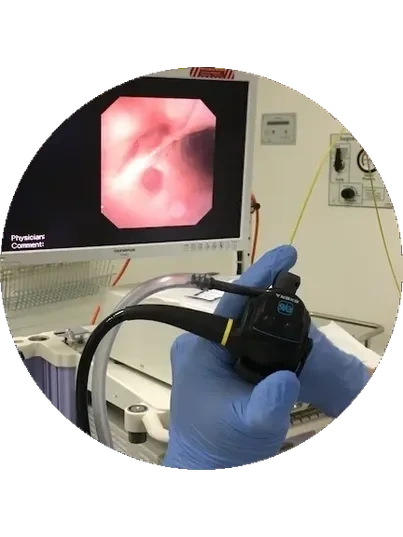
Bronchoscopy Step-by-Step provides a structured exercise-based approach to learning core bronchoscopic technical skills through simulation before relying on patient-based training. The system can be used with either inanimate models or computer-based simulation, as well as in patients.

Bronchoscopy Step-by-Step logo

Procedure checklists provide structured guides for key elements of bronchoscopic care, including informed consent, procedural pause, ten-point checklists, and step-by-step performance.

Validated tools such as B-STAT and EBUS-STAT provide objective measures of procedural performance and helped inform later competency-based assessment in bronchoscopy and interventional pulmonology. Related teaching resources include the Pleural Assessment Tools and the collected Synopses & Teaching Aids.

Ethics in Interventional Pulmonology logo

Technical skill and cognitive knowledge are only parts of competent bronchoscopic practice. Competence also requires sound clinical judgment: knowing when a procedure is appropriate, weighing benefits and risks, considering alternatives, incorporating patient values and preferences, and communicating effectively.

Systems-based practice has become increasingly important as physicians are asked to function as integrators of complex systems. Clinical decisions are shaped not only by individual expertise, but also by available resources, institutional practices, financial incentives, access to technology, societal pressures, and rapidly evolving diagnostic and therapeutic options.

Ethical responsibility therefore spans the entire process—from informed consent and patient safety to professional judgment, conflicts of interest, allocation of resources, and the responsible adoption of new technologies. These dimensions belong within procedural education just as surely as anatomy, technique, and procedural skill.

The 4-Box Practical Approach in Procedural Decision-Making presents a visual framework for working through bronchoscopic decisions by organizing the core elements that shape procedural judgment.

The Problem-Solving in Bronchoscopy series consists of modular lessons built around a problem, a solution, and an illustrative video, offering practical teaching in common bronchoscopic situations.

Developing Educators and Local Capacity

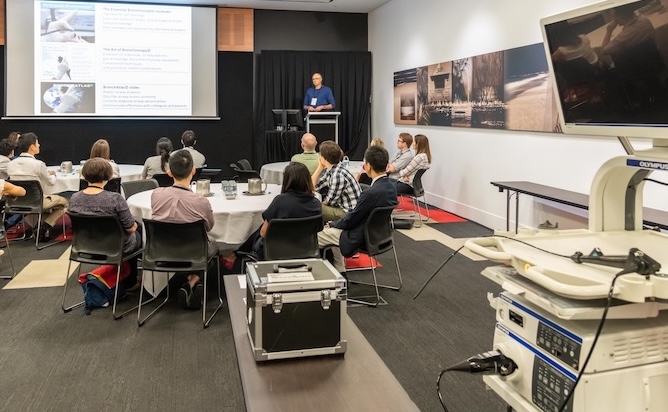
Bronchoscopy International’s educational work extended beyond training individual bronchoscopists. Certified and Master Instructors conducted dozens of Faculty Development and Train-the-Trainer programs in more than 30 countries, helping develop local educators able to incorporate competency-based methods into their own institutions and regional programs. The aim was not simply to conduct courses, but to build educational capacity that could continue after visiting faculty had left.

Bronchoscopy International training course with instructor, participants, and bronchoscopy equipment

Faculty Development

Faculty Development programs focused on helping experienced clinicians become better educators—strengthening skills in teaching, feedback, assessment, simulation, curriculum design, and learner-centered education.

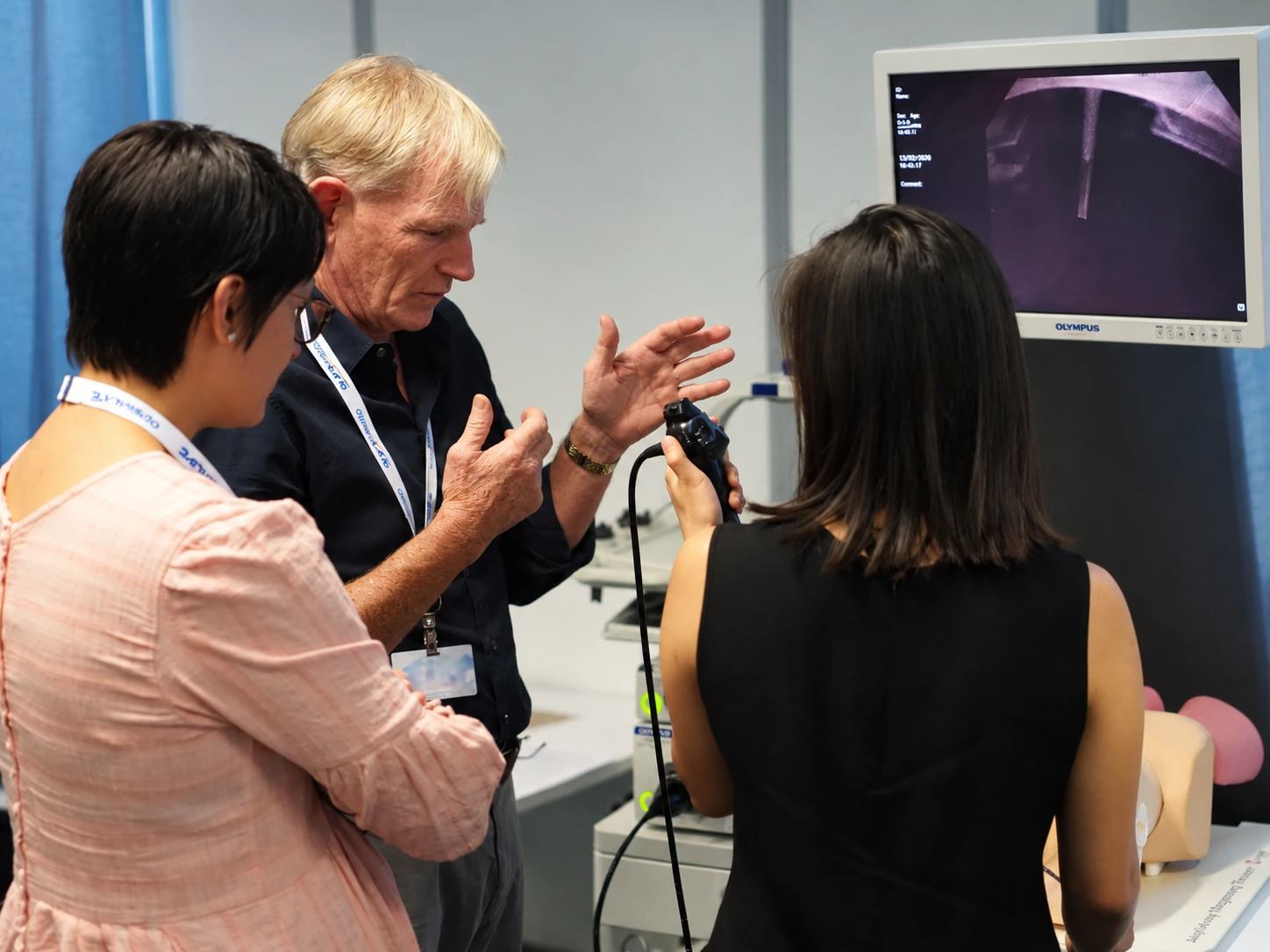
Train-the-Trainer bronchoscopy teaching session with instructor coaching other educators at a simulator

Train-the-Trainer

Train-the-Trainer programs prepared selected educators to carry a reproducible teaching approach back to their own institutions or regions, adapt it to local circumstances, and train others. Learning materials were deliberately shaped by regional needs, available resources, and educational culture.

About Bronchoscopy International®

Bronchoscopy International® was founded by Henri Colt, MD, as a global educational initiative devoted to improving bronchoscopy training, assessment, clinical judgment, and faculty development. Its work helped advance simulation-based learning, competency assessment, structured procedural training, and train-the-trainer programs around the world.