
Author Archives: hcolt

Pillars of Knowledge 4+1

I recently finished yet another (my third) reading of Roshi Philip Kapleau’s Three Pillars of Zen (Random House, 1980). This well known text is more than a simple introduction to Zen Buddhism, covering many facets of Zen practice and training. It was written almost forty years ago by one of the founding fathers of Zen in the United States (Philip Kapleau started The Rochester Zen Center in the 1960s).

Zen is a Japanese form of Buddhism that  values meditation and a state of mind free from delusions and confusion. Rossi Kapleau taught that Zen was more than a philosophy or a religion based on scriptures, but was also a state of being, attained and maintained through Teaching, Practice, and Enlightenment.

While far from considering myself a Zen expert; I always felt that Philip Kapleau was a kindred spirit. I have studied Zen since my early twenties, and after all, was myself born in Rochester, New York. But that is not why I am writing this piece.

Teaching, practice and enlightenment… three pillars of Zen… How might this triad relate to bronchoscopy education?

We know that Teaching/learning, is a two-way street. Knowledge itself is fourfold: cognitive, technical, affective, and experiential. Learning facts is the easy part, increasingly less difficult because of the ready access to technology. We no longer need to retain all facts in our brains, but must instead learn to process information and learn where and how to access the information that will be processed. Technical skill requires practice, and focused practice with clear goals, objectives, and expectations is better than playing around with equipment at a hands-on workstation. By interacting effectively during workshops, case-based discussions, and in the classroom, teachers and learners identify weaknesses, explore strengths, and strive toward a commonly acceptable level of expertise.

Affective and experiential knowledge, however, are less clearly defined. Because we all learn from what we do (hopefully), we learn from our mistakes as well as from our successes. Dr. Benjamin Bloom (Bloom’s taxonomy, 1956) considered affective as the way we deal emotionally with what we learn. This knowledge relates to our feelings, values, and attitudes. Experiential knowledge is often wrongly confused with affective knowledge because it is, in fact, based on our experience…but it relates to a truth based on one’s individual experience…and no two truths  (just like no two individual experiences) may be alike. Acquisition of all four types of knowledge is necessary in our quest for competency.

These four types of knowledge: cognitive, technical, affective, and experiential, could be called The Four Pillars of Education, but do they equate with the three pillars of Zen described by Kapleau? Teaching and practice are obviously essential, but what of enlightenment? Can an educator become enlightened? Can a student become enlightened? If so, how?

I pondered this during a recent meditation in the ancient fortress town of Kotor, in Montenegro. Sitting at the foot of a wall built one thousand years ago, I watched the soft, deep blue waters of the Adriatic Sea wash gently onto the shore below. I knew there was a fifth pillar to the educational process, a pillar that is rarely spoken of, nor easily taught:  It is the pillar of spiritual knowledge. By spiritual, I do not mean religious. Rather, I  am referring to that form of knowledge that comes from deep within the self, from knowing oneself, and from acknowledging that form of knowledge that speaks a universal truth; the knowledge that we are happier when we help others. That is why many of us join the health care profession, and it is why we strive to become the best that we can be.

4+1….you can count them on your hand.

Become a better teacher than your teacher

I have had the privilege of conducting more than 25 Train the Trainer workshops in over a dozen countries in the past five years. During these seminars, experienced educators share experiences, learn to use competency-oriented training materials such as checklists and assessment tools, master step-by-step teaching techniques for inspection bronchoscopy, and familiarize themselves with coaching methodologies used in case-based exercises. They learn about educational philosophies, and practice various approaches to didactic slide presentations.

A question often raised during these seminars is, “why is there no fixed agenda?” While there are many answers to this question, I thought I would clarify at least one of them.

Conducting seminars in different parts of the world means communicating with physician-leaders from different medical environments, social cultures, backgrounds, and experience. Each participant brings a different set of skills, biases, and assumptions to the program. While part of the seminar is task oriented, another part is dedicated to new challenges, including breaking beyond a traditional way of thinking about medical education.

Change is difficult, and resistance to change is a natural reaction for us all. By sharing various components of a multidimensional learning program with participants, instructors are suggesting that educators let go of some traditional habits, acquire new skills, and reflect on how to overcome resistance to change in their own institutions.

Therefore, one of the major doctrines of our Train the Trainer programs is flexibility.

Flexibility means adapting, in-real-time, to the needs and desires of program participants. It also means active listening on the part of program instructors. In this way, we identify and address needs. Through our example (being flexible and actively listening), we non-verbally provide participants with an experience to take home to their own students, because flexibility and active listening are key to successful individualized instruction; by being able to identify a student’s strengths, weaknesses, and respond accordingly with an appropriate educational intervention.

Train the Trainer seminars are culturally enriching, scientifically rewarding, emotionally challenging, and intellectually stimulating for everyone. In a few days, a seminar in Belgrade, Serbia will include experts from throughout the Balkans, and yes, the agenda is flexible:)

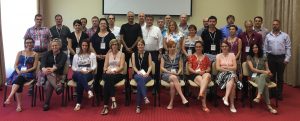
Bronchoscopy educators with their students, Hungary 2017
Perception as an instrument of change

Perception (definition): a way of regarding, understanding, or interpreting something; a mental impression

It doesn’t take a scientific study to say that practicing in a model is preferable to learning to perform medical procedures on patient after patient during on-the-job medical training. Yet few national bronchology societies purchase airway models to train their members. Indeed, the major obstacle I encounter while fundraising for our global medical education projects, is my inability to respond to the following question raised by potential philanthropists; “Why don’t doctors donate some of their own money to their national bronchology associations to buy models?”

I still don’t have a satisfactory answer.

Last year, I met John Perkins at a writers’ conference in San Miguel de Allende, Mexico. John identifies himself as an agent of change. He invites others to help him make the world a better place by exploring different cultures, spreading love, and protecting the environment. I witnessed firsthand the enthusiasm manifested by his workshop attendees, and I wonder whether a similar enthusiasm is shared by medical doctors attending our Train the Trainer workshops around the world. After all, doctors can make the world a better place by promoting selfless service, enhancing technical skills without exposing patients to the dangers of on-the-job training, and advocating for patient rights. These elements form the philosophical foundation of our seminars.

John writes that “Human activity is determined largely by perceived reality. Religions, culture, legal and economic systems, corporations, and even countries are created and maintained by perceived reality; when enough people accept a perception or when it is codified into law, that perception changes objective reality. The way to change economic and other systems is through crossing a Perception Bridge from old ways of thinking into new ones.” (John Perkins, author of Confessions of an Economic Hit Man).

That is what Certified and Master instructors of the Bronchology Education Project do. We ask bronchoscopists to cross a Perception Bridge. We ask them to abandon the idea that learning on patients is okay, and urge them to commit the intellectual and financial resources necessary to acquire technical skills using models before they perform procedures on people. One of my goals is that every bronchology association in the world has at least one model to help teach medical procedures. This will change our objective reality, and make the world a better place by eliminating patient suffering caused by on-the-job medical training.

Feelings are important

Oscar Wilde wrote that “experience is the name that everyone gives to their mistakes” (Lady Windemere’s Fan, Act III, 1892). Just as we are not expected to become champion tennis players without hours of physical training, coaching, and careful attention to our head game, doctors should not be expected to become competent bronchoscopists simply by taking the scope in hand at the patient’s bedside. As in sports, learning requires the acquisition of skills and facts, but also an understanding of how we feel about what we are doing. Professional athletes have recourse to a team psychologist. Doctors are presumed to converse with colleagues or other health care professionals.

When I ask bronchoscopists from around the world whether they practice their response to procedure-related complications such as massive bleeding, seizures, cardiopulmonary arrest, or pneumothorax, in a simulated setting, the answer is almost always no. Nor do they discuss how they feel after the occurrence of such complications. I think this is because doctors have learned by doing for too long, and only recently is there a move toward coaching using models, simulation, and debriefing sessions.

Organized efforts are still necessary, however, before new generations of physicians adopt this as the norm. The same can be said about addressing a doctor’s emotional responses to complications. Most surgery departments have morbidity and mortality conferences to discuss problem cases, but such practices are not routine within the interventional pulmonary community. Even when discussions occur, there is little support for physicians struggling with their feelings.

While it is relatively straightforward to convince an enthusiastic trainee that practicing on a model will accelerate growth along the learning curve, it is less obvious to persuade doctors that talking about their feelings (which addresses their affective and experiential knowledge) can help prevent complications and improve patient care, as well as reinforce positive attitudes toward medical practice.

An educational program that includes simulation-based instruction and open discussions about feelings, therefore, requires a paradigmatic shift where leaders think outside the box monopolized by “see one, do one, teach one” behaviors in order to embrace practices guided instead by a “First, do no harm” philosophy.

Master Instructor Viviana F. implements simulation-based bronchoscopy training in Brazil


Virtual Reality and the future of bronchoscopy education

The strength of clinical medicine resides in the practitioner’s ability to diagnose, treat, and understand the impact of disease on a patient’s condition. Such practical wisdom, or what Aristotle called phronesis is gained and nurtured at the bedside.

It is the scientific understanding of disease and health, Aristotle’s episteme, however, that leads to medicine’s greatest advances. From a technology, education, and practice perspective, interventional pulmonologists are the descendants of giants such as the American Chevalier Jackson, the German Gustav Killian, the Japanese Shigeto Ikeda, and the Frenchmen Jean-Francois Dumon and Christian Boutin.  These men armed themselves with technologically innovative equipment created as a result of discoveries in the optical sciences, improved the initially engineered product, and applied their creative skill and imagination to serve their fellow man.

Technology today provides interventional pulmonologists increasing means to diagnose and treat disease. It is no surprise therefore, to see a global focus on education in order to provide practitioners with a uniform foundation of knowledge and technical skill regardless of where they reside. The future of our educational process includes structured multidimensional learning programs, masterful use of simulation and models, and now, development of virtual reality-based instruction. Equipped with headsets from Oculus, for example, learners can already navigate the virtual airway to master anatomy in minutes. Using an iPad and programs such as BronchPilot Anatomy or BronchPilot EBUS, learners can master bronchoscopic movements, factual knowledge and inspection strategies well before touching a real patient.

Creating these virtual worlds is a current challenge for medical educators. It is a challenge the faculty of Bronchoscopy International and leaders of the World Association for Bronchology and Interventional Pulmonology gladly accept. Exciting times are surely ahead!

Time to focus on the practical needs of a revolution


Practicing Bronchoscopy Step-by-Step

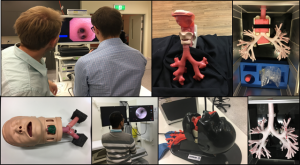
During the last decade I committed myself to a philosophical revolution based on the premise that it is unethical for doctors to learn their procedural skills on other human beings. From New York to New Delhi, and on every continent except Antarctica, I have taught that doctors have alternatives to climbing the learning curve patient after patient and, that such alternatives do not need to include animals or expensive cadavers. Computer-based simulation, plastic airway models and more recently, 3D-printer derived airway casts allow bronchoscopists to learn airway and mediastinal anatomy, navigate the tracheobronchial tree, perfect their knowledge of lobar and segmental anatomy, as well as practice the technical dexterity and communication skills needed to perform bronchoscopy safely, effectively, and efficiently.

Not surprisingly, there was some resistance to this new philosophy. Change is difficult, and replacing an age old paradigm built around a purely apprenticeship model (where procedural competency was assumed based on subjective evaluation and an objective enumeration of number of procedures performed), with a new paradigm that includes apprenticeship, mentorship, and several objective measures of learning in a multidimensional instructional program required the support of a growing number of physician experts decided upon becoming themselves agents of change. Today, the idea that patients should not suffer the burdens of procedure-related medical training has caught on. Procedural education is increasingly discussed in our medical societies and university training programs. Simulation centers exist in abundance, although easy and affordable access remains a challenge that must yet be overcome, and physicians everywhere increasingly accept the idea that learning and practicing bronchoscopy in a model must be a prerequisite to performing procedures in a real person.

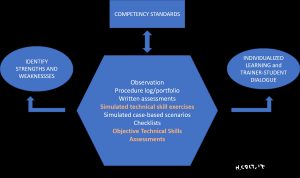
Like all revolutions, the philosophical must be coupled with the practical. For this new educational paradigm to take effect, therefore, we must improve access to affordable models for all physicians-in-training, as well as for those already in practice who wish to learn new procedures. Objective measures of technical skill, communication, and decision-making must also be incorporated into our training programs. Based on my experience conducting dozens of educational programs around the world, learners enthusiastically accept the idea that technical skill proficiency and a relatively high threshold of cognitive knowledge are necessary before working directly on patients. Hence, it is now our responsibility to provide learners everywhere with these tools, and to engage faculty by sharing content and techniques of multidimensional instructional programs during train-the-trainer programs and on-site courses.