Tag Archives: medicine

Judgment, Identity, and the Age of Systems


Medicine is no longer defined solely by what physicians can do, but by how they assume responsibility for decisions made within increasingly structured, technology-driven systems. As diagnostic pathways, algorithms, and artificial intelligence begin to organize clinical decisions in advance, the physician no longer stands outside the system, but operates within it. What can be done is expanding rapidly. Yet, as capability grows, so too does the burden of deciding what should be done.

In this evolving landscape, professional identity is shifting. It is no longer anchored primarily in technical skill, but in judgment—the ability to interpret, question, and assume responsibility within systems that increasingly shape the conditions of decision-making. Technology can organize information and suggest pathways, but it does not bear responsibility. That remains strictly human.

👉 Read the full essay on Substack:
Judgment, Identity, and the Age of Systems

If you like what you read, please follow me and subscribe to The Art of Being Human on SUBSTACK


This essay also accompanies a recent video lesson exploring these ideas in greater depth—particularly the evolving role of judgment in interventional pulmonology.

Watch here:  Who Are We Becoming

Steps to More: From Space to Medicine

Health care provider gain at the stars.


On April 10, the child in me—now seventy years old—was stirred back to life as I watched a space capsule descend into the Pacific Ocean. Decades earlier, I had watched another moment unfold on a flickering black-and-white television in a Washington hotel room as Neil Armstrong stepped onto the surface of the Moon. What I did not understand then was that the journey to the Moon would not end there. Its influence would be felt in hospitals, clinics, and in remote settings, shaping the way we monitor, diagnose, and care for patients.

From telemetry and remote monitoring to precision medicine and systems-based care, the legacy of space exploration is deeply embedded in modern medical practice. Yet its deeper significance lies elsewhere. It resides in the human impulse to look toward the unknown, to imagine ourselves beyond present constraints, and to extend the boundaries of what is possible.

If you like what you read, please follow me and subscribe to The Art of Being Human on SUBSTACK

👉 Read the full essay on Substack:
Steps to More: From Space to Medicine

Who is the Best?

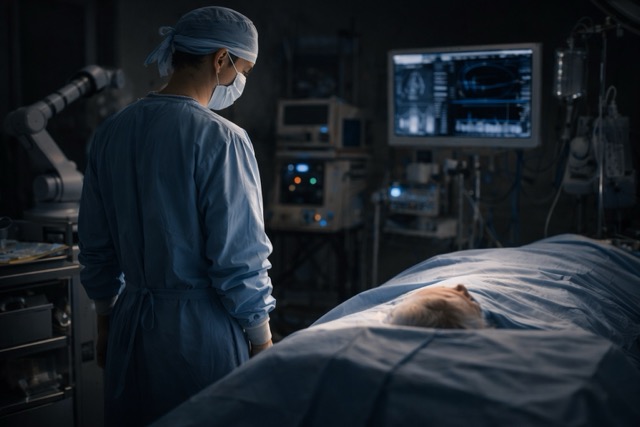
surgeon waiting at the cross roads at patient's bedside


Patients often ask a question that seems simple but resists a clear answer: Who is the best doctor for me? Even if transparent outcomes data were widely available, the answer would remain uncertain. Because excellence in medicine is not confined to what can be measured.

In the end, what patients are really asking is something deeper. Not just who can perform a procedure, but who knows when to act, when to wait, and how to navigate uncertainty. These are not matters of technical skill alone, but of judgment—and judgment, ultimately, reflects character.

👉 Read the full essay on Substack:
Who is the Best?
https://henricolt.substack.com/p/who-is-the-best

If you like what you read, please follow me and subscribe to The Art of Being Human on SUBSTACK

The Disease We Romanticized­—Then Forgot


There is a particular stillness in the faces of Amedeo Modigliani’s portraits. Elongated and instantly recognizable by their hollowed or pale blue eyes, with heads tilted like flowers resting on thin, swan-like necks, they now grace the walls of the world’s great museums. Many carry an unspoken fragility—a sense of life both vivid and already receding, much like their creator, who lived and died under the shadow of tuberculosis.

Tuberculosis was once so visible that its outward signs were aestheticized—what came to be known as “tubercular chic.” Today, the opposite has occurred. The disease has not disappeared, but rather receded from public awareness. Yet it remains the leading cause of death from a single infectious agent worldwide, affecting millions each year.

👉 Read the full essay on Substack:
The Disease We Romanticized—Then Forgot

If you like what you read, please follow me and subscribe to The Art of Being Human on SUBSTACK

The Question Patients Cannot Answer

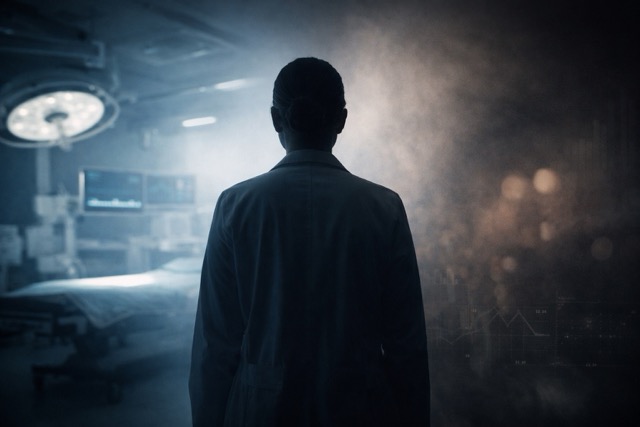
Physician torn between two worlds: patient care and data


Procedural medicine is built on the premise that skills can be seen, measured, and compared. Physicians who perform procedures are trained, above all, to intervene, and their success is often defined by dexterity, decisiveness, and outcomes. It is therefore natural that patients would want to choose their doctors based on published results of technical success. Yet, somewhat paradoxically, only a handful of specialties provide robust, publicly accessible, risk-adjusted outcomes that allow meaningful comparisons across institutions, and even fewer at the level of individual physicians.

In Interventional Pulmonology, where technological advances have expanded the ability to diagnose and treat complex airway diseases, this gap remains particularly evident. Patients who require these often life-altering or life-saving procedures are left without clear guidance on how to choose their physicians. The question they most want answered; Who is the best doctor for me? is one that medicine, despite its commitment to evidence and measurements, is not yet equipped to fully address.

👉 Read the full essay on Substack: The Question Patients Cannot Answer

If you like what you read, please follow me and subscribe to The Art of Being Human on SUBSTACK

Rethinking Legacy Thinking

tree and books Rethinking Legacy Thinking


Legacy thinking is often described as a way of thinking about the future, especially when it involves leaving something behind for the next generation. Yet the same phrase can mean something quite different. Legacy thinking can also refer to the habit of staying anchored to the past. In this sense, it means hoping or presuming that habits and ideas that once worked will continue to work indefinitely.

In my experience as a physician, teacher, and writer, healthy legacy thinking transmits principles rather than habits. Principles endure even as methodologies, tools, and techniques evolve. Each new generation faces the challenge of deciding what should be preserved, what should be discarded, and what warrants adaptation.

For those interested in a contemplative examination of the subject, I explore these reflections more fully in a recent essay on Substack: https://henricolt.substack.com/p/rethinking-legacy-thinking

If you like what you read, please follow me and subscribe to The Art of Being Human on SUBSTACK

The Physician’s Journey: Transitions, Burnout, and Reinvention

physician by river calmly thinking about professional transition and reinvention


Medicine is a profession marked by transitions, though we rarely name them as such. In this Substack essay, I reflect on burnout, not as a weakness, but as a signal that change is necessary before health care professionals collapse under the burdens of accumulated years, growing responsibilities, unfriendly work environments, and shifting systems.

As medicine enters an era increasingly affected by artificial intelligence and structural transformation, the ability to transition and even reinvent oneself is even more important than before. We are reminded that while tools and roles may evolve, the moral dimensions of medical practice remain. What endures is more than technical expertise, it is the human capacity to care, with judgment, presence, and compassion.

You can read the full essay on Substack here. https://henricolt.substack.com/p/the-physicians-journey-transitions

I welcome your reflections. 

If you like what you read, please follow me and subscribe to The Art of Being Human on SUBSTACK

Anyone Can Be A Mentor

Doctor in white coat and stethoscope thinking. Two doctors in the background with a chart.


Mentorship is an essential part of professional and personal development. In medicine, it has been an especially dominate force, in part because of traditional apprentice-like training, but also because it has been a most opportune way for health care providers to learn to emulate certain behaviors and ways of thinking. It has also been a traditional vehicle for the transmission of knowledge. Authority descends from senior to junior physicians, to trainees, and students. Today, however, that alignment is less secure.

Technology puts information as well as world-class training tools and illustrated behaviors at the hands of virtually anyone almost immediately. Younger generations are often more adept at using new technologies than their senior colleagues. Traditions are questioned. Conventions demand justification based on more than experience alone. I’ve been thinking quite a bit about mentoring; about its good sides as well as its limitations and vulnerabilities, especially in an era of democratized knowledge and reversed mentoring.

For those interested in a contemplative examination of the subject, I explore these reflections more fully in a recent essay on Substack: Anyone Can Be a Mentor

If you like what you read, please follow me and subscribe to The Art of Being Human on SUBSTACK

Exponential Thinking…Wow

displays health care and scientific advances along a nonlinear curve


People in general, and physicians in particular, are not always comfortable with exponential thinking. This is because we live life linearly. We grow older year after year. We learn first to crawl, then walk, then run. We learn to invest month after month to grow our net worth (though it is here that most people learn the value of compounding), and in medicine, we learn step by step, often one patient at a time. 

This way of thinking has been at the root of apprenticeship-like medical training. Experience is linear, so is mentorship, and the backbone of health care delivery.

The same might be said of our approach to the natural history of disease. For most illnesses, we speak of progression in stages, and even in the case of infections, we describe phases that progress over time from incubation to prodrome, through illness, decline, and convalescence. 

We have learned through bitter experience, however, that many infectious diseases: measles, Ebola, influenza, and COVID-19, for example, spread exponentially. We have also learned of the dangers of something known as exponential growth bias, which is defined as “the pervasive tendency to linearize exponential functions when assessing them intuitively.” 

Our public health systems and millions of patients bear the consequences of such misunderstanding.

Exponential growth is usually defined as a process in which change accelerates in proportion to what already exists (the classic J-shaped curve on a graph). In other words, the larger something becomes, the faster it grows. This contrasts with linear growth, whereby a quantity increases at a constant rate over an equal interval of time (the classic straight line on a graph).

In science, medicine, technology, and finance, linear thinking underestimates the acceleration of anything that grows exponentially. At its core, exponential thinking demands attention to rates of change rather than the quantity of change. 

Tumor growth presents a humbling illustration. Tumor cells, for example, are known to increase in number in proportion to their existing volume. In pulmonary medicine and oncology, we use tumor doubling time (DT) and volume doubling time (VDT) to assess pulmonary nodules and malignancies. Because malignant growth often follows near-exponential kinetics in its early phases, a lesion that appears small in diameter and stable over a short interval of time may already be progressing along a steep growth curve and doubling in volume.

Failure to appreciate this dynamic reflects a misunderstanding of the difference between linear and exponential growth. This invites complacency and exposes both patients and their health care providers to the risks of delayed diagnostic or therapeutic intervention.

Today, artificial intelligence introduces similar nonlinear dynamics into interventional pulmonology. Navigation systems refine accuracy through iterative learning. Imaging segmentation algorithms improve multiplicatively as datasets expand. Risk stratification models enhance predictive power across tens of thousands of cases. What once required the slow accumulation of individual procedural experiences now crosses continents and health care institutions with the click of a computer mouse. 

We must understand that many clinical processes, technological advances, scientific discoveries, and healthcare system failures are not gradual. They often follow a nonlinear curve and accelerate dangerously once a critical threshold is reached. Thinking exponentially helps us recognize these nonlinear dynamics before a crisis appears. 

Acting before a threshold is reached, rather than reacting after it has been crossed, is a mark of responsible, ethical, and forward-thinking leadership.

  • Berg SH, Lungu DA, Brønnick K, et al. Exponential Growth Bias of Infectious Diseases: Protocol for a Systematic Review. JMIR Res Protoc 2022;24;11(10):e37441. doi: 10.2196/37441.
  • Beibei J, Daiwei H, Carlijn M. et al., Lung cancer volume doubling time by computed tomography: A systematic review and meta-analysis. European Journal of Cancer 2024;212:114339. 10.1016/j.ejca.2024.114339.

If you like what you read, please follow me and subscribe to The Art of Being Human on SUBSTACK

What Remains After a Patient Dies

: A solitary human figure seated in a dim, quiet interior space, facing soft light


I’ve written before on Colt’s Corner about resilience in medicine, mostly in the context of endurance, burnout, and recovery. Recently however, I found myself returning to the question from a different direction, less as a skill to be cultivated and more as an ethical stance based on human connection. 


After a recent lecture, several nurses and physicians spoke about what remains after a patient dies. They asked how one can resume work after facing therapeutic failures repeatedly or after suffering the emotional toll of sustained compassionate caregiving. Their questions led me to revisit resilience not as toughness, but as a form of presence that allows compassion without collapse. 

For those interested in a more contemplative examination of the subject, I explored these reflections more fully in a recent essay on Substack: What Remains After a Patient Dies.


If you like what you read, please follow me and subscribe to The Art of Being Human on SUBSTACK