Category Archives: Colt’s Corner

What the Bronchoscopist Needs to Know Series

Dear friends,

Another educational module was added to the Bronchoscopy Academy YouTube channel, expanding our growing library of foundational bronchoscopy and airway education resources designed for trainees, fellows, practicing clinicians, nurses, respiratory therapists, and others involved in pulmonary and airway care. Three more in this new series called What the Bronchoscopist Needs to Know are coming in the next weeks!

Future topics include:

• Lung Adenocarcinoma
• Squamous cell lung cancer
• Small cell lung cancer

These short educational videos contribute to structured learning intended to support bronchoscopy education worldwide.

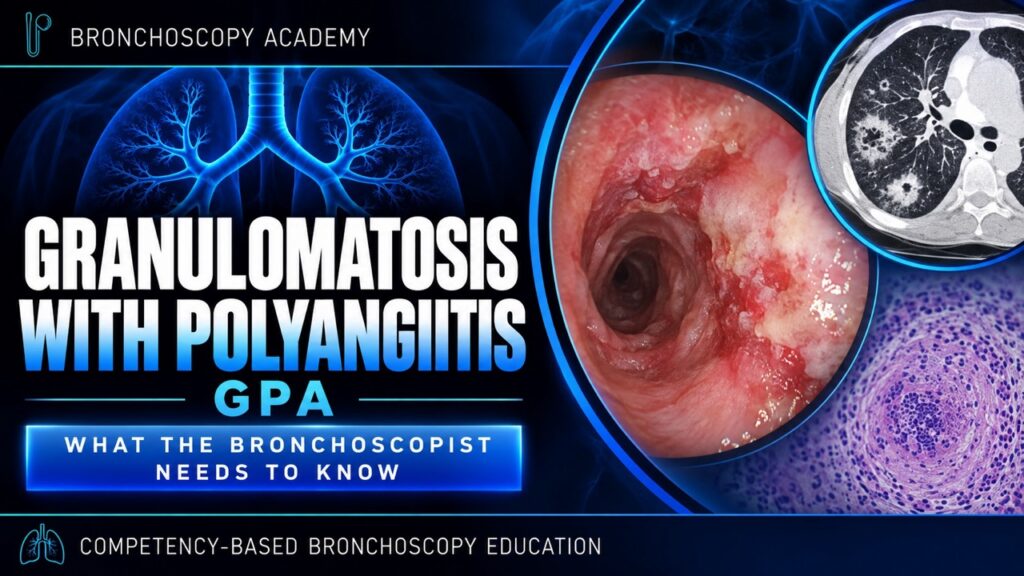
The videos about Granulomatosis with Polyangiitis (previously known as Wegener’s Granulomatosis) may be viewed here:   Another New module

If you find the material useful, please Like, Subscribe, and Share  New Modules Available to my YouTube channel to receive notifications as other new modules are added.

My hope remains what it has long been: to help democratize bronchoscopy education and make high-quality learning resources more widely accessible.

With best wishes,

Henri Colt, M.D.
Bronchoscopy Academy
Bronchoscopy.org
New Video Lecture on YouTube’s Bronchoscopy Academy


This lecture was recently given at the 2026 American Association for Bronchology and Interventional Pulmonology Annual Meeting in Denver, Colorado. A version of the lecture is now available on my YouTube channel @Bronchoscopy Academy.

The Hidden Curriculum: Safety, Stress, and Strength in Training

Much of medical education focuses on what can be taught explicitly: knowledge, technique, procedural skill, and clinical decision-making. But trainees also learn from what is modeled around them—the ways experienced physicians respond to uncertainty, error, stress, responsibility, and one another.

In this lecture, Henri Colt explores the “hidden curriculum” of medical training and the ways professional character is formed implicitly through observation, culture, and example. Using bronchoscopy and interventional pulmonology as the setting, the discussion examines psychological safety, the pressures placed on trainees, the importance of asking for help, and the role of judgment in knowing when to proceed—and when not to.

The central question is not simply what we are teaching, but what kind of physicians our teaching environments are helping people become.

Topics:
Hidden curriculum in medicine
Bronchoscopy education and training
Psychological safety
Stress and performance
Professional character
Judgment and responsibility
Mentorship and role modeling
Interventional pulmonology education

#Bronchoscopy #PulmonaryMedicine #MedicalEducation #BronchoscopyAcademy #InterventionalPulmonology

An article relevant to the subject can be found on my Substack: What We Teach Without Knowing It at The Art of Being Human.

Another new article on Substack

A new essay has just been published on my Substack, The Art of Being Human.

Life is filled with last times, though we rarely recognize them when they happen. In Never Again, I reflect on endings that announce themselves as well as on the many more that pass unnoticed.

You can read the essay on my Substack: The Art of Being Human.

Go to: https://substack.com/home/post/p-212499536

If you enjoy these essays, I would greatly appreciate your support by subscribing, sharing them with others, or leaving a comment. Your engagement helps these conversations reach a wider audience.

Thank you.

New Article on Substack

A new essay has just been published on my Substack, The Art of Being Human.

In The End of Automatic Authority,” I examine one of the quiet revolutions unfolding around us. For much of history, authority was rooted in privileged access to knowledge. Today, that foundation is rapidly disappearing. The democratization of information, accelerated by artificial intelligence, is reshaping how we learn, whom we trust, and what it truly means to possess expertise.

This essay explores why authority, respect, experience, and judgment should no longer be viewed as inseparable, and why the future belongs not to those who simply know more, but to those who can think more clearly, exercise sound judgment, and help others navigate uncertainty. I hope you’ll take a few minutes to read it, and, as always, I welcome your thoughts and discussion.

You can read the essay on my Substack: The Art of Being Human.

If you enjoy these essays, I would greatly appreciate your support by subscribing, sharing them with others, or leaving a comment. Your engagement helps these conversations reach a wider audience.

Thank you.

Bronchoscopy Academy New Modules

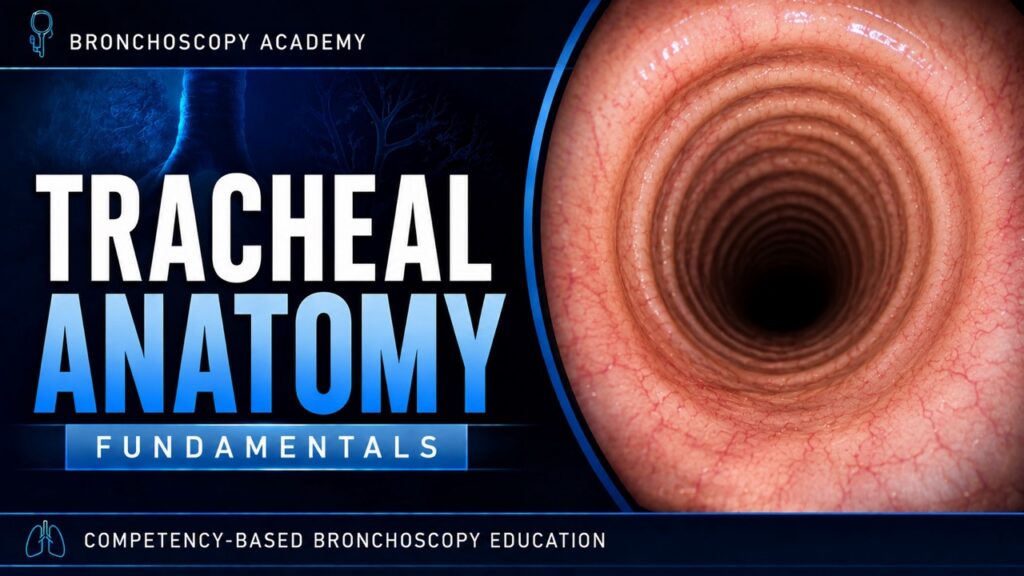
Tracheal Anatomy Training Video


Dear colleagues,

Another couple of educational modules were added to the Bronchoscopy Academy YouTube channel, expanding our growing library of foundational bronchoscopy and airway education resources designed for trainees, fellows, practicing clinicians, nurses, respiratory therapists, and others involved in pulmonary and airway care. More are coming in the next weeks!

Recent topics include:

• Normal laryngeal anatomy
• Laryngeal abnormalities
• Tracheal anatomy fundamentals
• Bronchoscopy equipment fundamentals
• Bronchoscopy brushing techniques
• Bronchoscopy reports and documentation
• Additional foundational airway recognition modules

These short educational videos emphasize practical anatomy, procedural fundamentals, airway recognition, and structured learning intended to support bronchoscopy education worldwide.

Videos may be viewed here:   Another New Module.

If you find the material useful, please Like, Subscribe, and Share New Modules Available to my YouTube channel to receive notifications as other new modules are added.

My hope remains what it has long been: to help democratize bronchoscopy education and make high-quality learning resources more widely accessible.

With best wishes,

Henri Colt, M.D.
Bronchoscopy Academy
Bronchoscopy.org

Bronchoscopy Academy More modules added

Bronchoscopy Academy Modules with bronchoscopy image


Dear colleagues,

Another couple of educational modules were added to the Bronchoscopy Academy YouTube channel, expanding our growing library of foundational bronchoscopy and airway education resources designed for trainees, fellows, practicing clinicians, nurses, respiratory therapists, and others involved in pulmonary and airway care. More are coming in the next weeks!

Recent topics include:

• Normal laryngeal anatomy
• Laryngeal abnormalities
• Tracheal anatomy fundamentals
• Bronchoscopy equipment fundamentals
• Bronchoscopy brushing techniques
• Bronchoscopy reports and documentation
• Additional foundational airway recognition modules

These short educational videos emphasize practical anatomy, procedural fundamentals, airway recognition, and structured learning intended to support bronchoscopy education worldwide.

Videos may be viewed here:  New Modules Available

If you find the material useful, please Like, Subscribe, and Share to my YouTube channel to receive notifications as new modules are added.

My hope remains what it has long been: to help democratize bronchoscopy education and make high-quality learning resources more widely accessible.

With best wishes,

Henri Colt, M.D.
Bronchoscopy Academy
Bronchoscopy.org

New Bronchoscopy Academy Videos Available


Dear colleagues,

New educational modules have recently been added to the Bronchoscopy Academy YouTube channel, expanding our growing library of foundational bronchoscopy and airway education resources designed for trainees, fellows, practicing clinicians, nurses, respiratory therapists, and others involved in pulmonary and airway care. More are coming in the next weeks!

Recent topics include:

• Normal laryngeal anatomy
• Laryngeal abnormalities
• Tracheal anatomy fundamentals
• Bronchoscopy equipment fundamentals
• Bronchoscopy brushing techniques
• Bronchoscopy reports and documentation
• Additional foundational airway recognition modules

These short educational videos emphasize practical anatomy, procedural fundamentals, airway recognition, and structured learning intended to support bronchoscopy education worldwide.

Videos may be viewed here: New Modules Available

If you find the material useful, please Like, Subscribe, and Share to my YouTube channel to receive notifications as new modules are added.

My hope remains what it has long been: to help democratize bronchoscopy education and make high-quality learning resources more widely accessible.

With best wishes,

Henri Colt, M.D.
Bronchoscopy Academy
Bronchoscopy.org
A New Home For My Reflective Writing

Substack Banner Henri Colt Art of Being Human


Dear Friends,

Over the past years, you chose to receive these brief reflections through Colt’s Corner. I have always been mindful that your attention is not casual—it is given, and you have generously subscribed to Colt’s Corner with interest and enthusiasm.

I’ve decided now to bring this work into a single, more deliberate space on Substack. Not simply as short reflections, but as a sustained body of writing that explores what it means to live, to act, and to care attentively. I publish essays and reflective pieces that move between clinical experience and personal narrative, between art, literature, philosophy, science, and medicine.

With that, my longer reflective writing will now appear on Substack.

Colt’s Corner will remain here for occasional updates related to Bronchoscopy International, Bronchoscopy Academy, and other professional or educational activities.

If these notes have been meaningful to you, I invite you to continue with me here: henricolt.substack.com

Judgment, Identity, and the Age of Systems


Medicine is no longer defined solely by what physicians can do, but by how they assume responsibility for decisions made within increasingly structured, technology-driven systems. As diagnostic pathways, algorithms, and artificial intelligence begin to organize clinical decisions in advance, the physician no longer stands outside the system, but operates within it. What can be done is expanding rapidly. Yet, as capability grows, so too does the burden of deciding what should be done.

In this evolving landscape, professional identity is shifting. It is no longer anchored primarily in technical skill, but in judgment—the ability to interpret, question, and assume responsibility within systems that increasingly shape the conditions of decision-making. Technology can organize information and suggest pathways, but it does not bear responsibility. That remains strictly human.

👉 Read the full essay on Substack:
Judgment, Identity, and the Age of Systems

If you like what you read, please follow me and subscribe to The Art of Being Human on SUBSTACK


This essay also accompanies a recent video lesson exploring these ideas in greater depth—particularly the evolving role of judgment in interventional pulmonology.

Watch here:  Who Are We Becoming

Steps to More: From Space to Medicine

Health care provider gain at the stars.


On April 10, the child in me—now seventy years old—was stirred back to life as I watched a space capsule descend into the Pacific Ocean. Decades earlier, I had watched another moment unfold on a flickering black-and-white television in a Washington hotel room as Neil Armstrong stepped onto the surface of the Moon. What I did not understand then was that the journey to the Moon would not end there. Its influence would be felt in hospitals, clinics, and in remote settings, shaping the way we monitor, diagnose, and care for patients.

From telemetry and remote monitoring to precision medicine and systems-based care, the legacy of space exploration is deeply embedded in modern medical practice. Yet its deeper significance lies elsewhere. It resides in the human impulse to look toward the unknown, to imagine ourselves beyond present constraints, and to extend the boundaries of what is possible.

If you like what you read, please follow me and subscribe to The Art of Being Human on SUBSTACK

👉 Read the full essay on Substack:
Steps to More: From Space to Medicine