Tag Archives: pulmonary

A Final Note from Colt’s Corner

Substack Banner Henri Colt Art of Being Human


Dear Friends,

Over the past years, you chose to receive these brief reflections through Colt’s Corner. I have always been mindful that your attention is not casual—it is given, and you have generously subscribed to Colt’s Corner with interest and enthusiasm.

I’ve decided now to bring this work into a single, more deliberate space on Substack. Not simply as short reflections, but as a sustained body of writing that explores what it means to live, to act, and to care attentively. I publish essays and reflective pieces that move between clinical experience and personal narrative, between art, literature, philosophy, science, and medicine.

With that, Colt’s Corner will no longer be updated.

If these notes have been meaningful to you, I invite you to continue with me here: henricolt.substack.com

The Question Patients Cannot Answer

Physician torn between two worlds: patient care and data


Procedural medicine is built on the premise that skills can be seen, measured, and compared. Physicians who perform procedures are trained, above all, to intervene, and their success is often defined by dexterity, decisiveness, and outcomes. It is therefore natural that patients would want to choose their doctors based on published results of technical success. Yet, somewhat paradoxically, only a handful of specialties provide robust, publicly accessible, risk-adjusted outcomes that allow meaningful comparisons across institutions, and even fewer at the level of individual physicians.

In Interventional Pulmonology, where technological advances have expanded the ability to diagnose and treat complex airway diseases, this gap remains particularly evident. Patients who require these often life-altering or life-saving procedures are left without clear guidance on how to choose their physicians. The question they most want answered; Who is the best doctor for me? is one that medicine, despite its commitment to evidence and measurements, is not yet equipped to fully address.

👉 Read the full essay on Substack: The Question Patients Cannot Answer

If you like what you read, please follow me and subscribe to The Art of Being Human on SUBSTACK

What Remains After a Patient Dies

: A solitary human figure seated in a dim, quiet interior space, facing soft light


I’ve written before on Colt’s Corner about resilience in medicine, mostly in the context of endurance, burnout, and recovery. Recently however, I found myself returning to the question from a different direction, less as a skill to be cultivated and more as an ethical stance based on human connection. 


After a recent lecture, several nurses and physicians spoke about what remains after a patient dies. They asked how one can resume work after facing therapeutic failures repeatedly or after suffering the emotional toll of sustained compassionate caregiving. Their questions led me to revisit resilience not as toughness, but as a form of presence that allows compassion without collapse. 

For those interested in a more contemplative examination of the subject, I explored these reflections more fully in a recent essay on Substack: What Remains After a Patient Dies.


If you like what you read, please follow me and subscribe to The Art of Being Human on SUBSTACK

History of Pulmonary Medicine: From Antiquity to AI

history of pulmonary medicine shows evolution and AI


The history of pulmonary medicine is replete with famous names and milestone events that changed the face of medical science over centuries. From early empirical observations in ancient civilizations to Egyptian texts describing herbal treatments and surgical interventions, it is clear that humanity has suffered from lung disease since the days when Homo sapiens and its predecessors first walked the earth. What follows is not a comprehensive history, but some thoughts on how shifts in knowledge have shaped pulmonary medicine. 

Hippocrates and other Greek practitioners set guidelines for medical practice. They also defined and described many breathing disorders, not the least of which was phthisis, later known as consumption or pulmonary tuberculosis. They described and treated pleurisy and raised awareness about the potential contagiousness of what would ultimately be recognized as infectious lung diseases centuries before the discovery of germ theory.

After that, another Greek physician, Galen of Pergamon, who practiced in the Roman Empire in the second century CE, shaped the future of medicine for centuries. Although many of his findings rooted in anatomical studies and theoretical iterations of what ultimately became the humoral theory for disease needed to be revised or debunked, Galen was forward-thinking in the ways he tied symptomatology (medical semiology), the anatomical structure of the human body, and the external environment on the course of disease. He was among the first to suggest that air, water, and even emotional disturbances could have an adverse impact on human health and wellness.

New theories of medicine prospered only centuries later, when the Islamic physician Avicenna (Ibn Sina) published his Canon of Medicine and Book of Healing (11th century). The Renaissance, however, brought about some of the greatest changes and the abandonment of most antiquated Galenic theories regarding lung disorders. Anatomists/physicians such as Vesalius, who described the mechanics of respiration and demonstrated the principles underlying positive-pressure ventilation, and Michael Servetus, among the first to describe the pulmonary circulation (early to mid-16th century), were instrumental in building new foundations from which future discoveries in pulmonary medicine would be made.

From the 17th to the 20th century, new breakthroughs would occur particularly in the realms of microbiology, pharmacology, imaging studies, and physician concerns for public health. The discovery of oxygen and the physiology of respiration, accompanied by widespread adoption of Laennec’s stethoscope revolutionized bedside diagnosis and global thinking about the diagnosis, treatment, and prevention of pulmonary diseases. 

Concomitantly, advances in the diagnosis and management of infectious lung disease, the establishment of links between smoking and disorders such as lung cancer and COPD, and growing attention to occupational lung disease anchored pulmonary medicine as a social discipline.

Today, we have reached a new inflection point in the history of pulmonary medicine. Artificial intelligence is reshaping medical diagnosis and decision-making in ways that we cannot yet fully comprehend. Machine-learning algorithms already outperform traditional methods in image interpretation for lung nodules and interstitial lung disease. AI-assisted pathology and cytology promise laboratory expertise in even the most remote corners of the world. Tools combining large language models with genomic and gene-editing processes are accelerating discovery and assisting in earlier diagnosis and management of genetic disorders. Robotics and robotic-assisted bronchoscopy are penetrating the pulmonary procedures world at almost warp speed, providing higher diagnostic yields for lung cancer and other disorders by enabling better access to hard-to-reach peripheral nodules compared to traditional methods.

In the face of such rapidly changing times, our challenge is in finding ways to both embrace and harness computational power. While debates about the risks versus the advantages of AI in pulmonary medicine are helpful, we should also focus on how technological authority can go hand-in-hand with professional responsibility.

  • The Cambridge History of Medicine (2006). Eds. Roy Porter. Cambridge University Press.
  • Murray JF. A thousand years of pulmonary medicine: good news and bad. European Respiratory Journal 2001 17(3): 558-565; DOI: https://doi.org/10.1183/09031936.01.17305580.
  • Mahajan AK, Duong DK, Cortes J, et al. The Match 2 Study: Robotic Assisted Bronchoscopy with Integrated Imaging with Assessment of Digital Tomosynthesis (DT) and Augmented Fluoroscopy (AF): Three-Dimensional Accuracy as Confirmed by Cone Beam Computed Tomography (CBCT), Respiratory Medicine 2026. https://doi.org/10.1016/j.rmed.2026.108693.
  • Topol EJ. High-performance medicine: the convergence of human and artificial intelligence. Nat Med 2019;25(1): 44-56. 

If you like what you read, please follow me and subscribe to the The Art of Being Human on SUBSTACK

A New Home for My Writing

landscape stethoscope and ink pen announcement of new home for Henri Colt on Substack


I’m grateful you have been reading my work here, and I’m honored that so many of you around the world have viewed or downloaded educational materials from bronchoscopy.org in support of our shared educational mission.

I will continue to add to this website, and to post on Colt’s Corner.

For some time now, however, I’ve been thinking about where my longer, more reflective writing belongs. These include excerpts from my books, longer essays, short stories, and commentaries—reflections on medicine, philosophy, literature, science, art, and the fragile beauty of our shared lives.

I’ve begun publishing this work on Substack — a quieter space that allows for long-form writing and more direct conversation with readers. 

If you would like to continue reading there, 
you can find my work and subscribe here:
Subscribe on Substack

A recent essay:  On Friendship and Sudden Loss

Why World AIDS Day Still Matters

Doctor in white coat wearing the Red Ribbon that remains a symbol of awareness, compassion, and the unfinished work of ending AIDS.
Photo courtesy Bermix studio (Unsplash)

HIV/AIDS is now manageable, yet millions of people still lack access to care. The world commemorates December 1 as World AIDS Day, a date observed since 1988 to remind us that HIV/AIDS remains a major global health challenge. Today, more than 40 million people are living with HIV worldwide, the majority in sub-Saharan Africa. Thanks to antiretroviral therapy and improved treatment of opportunistic infections, deaths from HIV/AIDS have fallen by more than fifty percent since 2010, and HIV can now be considered a chronic, manageable health condition. 

Transmission of HIV continues, however. More than one million new infections occurred in 2024, with particularly high rates among young women in Africa. Moreover, according to the World Health Organization, only 87 percent of people living with HIV know their status, and nearly one quarter are not receiving antiretroviral therapy.

Yet political commitment has not translated into equitable access. In 2015, United Nations world leaders unanimously pledged to end the AIDS epidemic by 2030. According to UNAIDS, the world is not on track to meet that goal. Progress has been hampered by breaks in solidarity between and within countries. Advances in long-acting treatment and prevention technologies are not being adequately shared with all low- and middle-income nations, and many HIV programs continue to overlook people from key populations. These include sex workers; gay men and other men who have sex with men; people who inject drugs; transgender people; and people who are incarcerated or detained in closed settings. At the same time, rising infection rates are being reported in eastern Europe and central Asia, Latin America, and the Middle East and North Africa. 

Although access to HIV treatment continues to expand, prevention and education programs have suffered from chronic underfunding. Household surveys suggest that condom use has declined in recent years, particularly among young people aged 15-24 and among those engaging in sex with non-regular partners. In many countries, community-led organizations are also struggling to survive financially, especially those addressing HIV alongside broader human rights concerns, including the right to universal health care.

Given that millions of people continue to live with HIV infection and HIV-related disease, HIV/AIDS remains a serious threat to public health. Continued progress in prevention, diagnosis, and treatment is essential, but at least three additional challenges demand attention. First, stigma and discrimination must still be eliminated in many regions. Second, the aging population of people living with HIV requires health systems capable of managing patients with chronic comorbidities such as hypertension, diabetes, and cancer. Finally, health care providers and community educators must not overlook the ongoing risk of HIV transmission among older adults.

The awareness ribbon reminds us that awareness without action is insufficient. The never- trademarked Red Ribbon was chosen as the international symbol of AIDS awareness by the Visual AIDS Artists Caucus in 1991 and was first worn by actor Jeremy Irons at that year’s Tony Awards. The ribbon symbolizes love and compassion for those people living with HIV/AIDS, blood in recognition of transmission, and urgency—a signal that the work of prevention, solidarity, and care remains unfinished.

California’s Care Divide

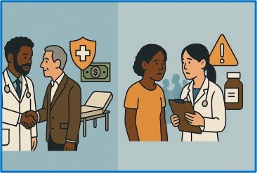
Doctors provide care to low-income patients


California’s health care system is increasingly divided between two contrasting health care business systems. These are high-cost concierge medicine and the essential safety net of Medi-Cal. This growing split is shaping health care experiences across the state. It is not surprising, therefore, that many of my friends and acquaintances have been complaining about their health care recently. 

Escalating costs, decreased face time with their physicians, obviously hurrying nurses and administrative staff, and difficulties scheduling tests and follow-up appointments are commonly discussed over coffee. Stories of bad experiences seem to abound. One was about a doctor saying they could move their patient through the system faster if they signed up for her ‘concierge services.’ Another was about a subspecialist who didn’t introduce themselves to new patients at a busy neighborhood public health clinic.

This got me thinking again about two aspects of the health care business in the United States, particularly in California, which has a population of almost 40 million. The first is known as Concierge medicine. In these practices, physicians charge substantial monthly or annual retainers, sometimes reaching as high as $20,000 per year. 

These services promise faster access, longer visits, and more personalized care. Some concierge practices bill insurance companies, especially for specialty services, lab tests, procedures, and imaging studies. Others, mainly in the realm of direct primary care (DPC), might not bill third-party insurers for some things. Patients pay either through their retainer or directly using a lower fee-for-service model.

Today, concierge services are provided by about 2% of U.S. physicians, but they are growing rapidly. Some studies show that these services reduce emergency department use and improve patient and physician satisfaction. One recent study showed that California, with its many wealth-concentrated urban and suburban neighborhoods, has the highest concentration and growth rate of concierge practices in the United States. Perhaps this is why people refer to them as “boutique” or “VIP” medicine.

A second aspect of the health care business is Medi-Cal, California’s Medicaid program that provides health insurance to low-income individuals and families. Eligibility is linked to the Federal Poverty Level. This corresponds to about fifteen million people, more than one-third of the state’s residents. According to the California Health Care Foundation, this means 3 in 7 children, 2 in 9 non-elderly adults, and 2 in 5 people with disabilities. It also includes 1.5 million Californians aged 65 and older (about 25% of the 6 million seniors living in California).

My own experience caring for patients with Medi-Cal coverage was, for the most part, nontraumatic. Perhaps this is because my department was in an academic center of the University of California, which did not distinguish between types of insurance. My team considered all our patients VIPs, regardless of insurance status, race, nationality, gender, social position, financial situation, sexual orientation, or education. For this, I am both grateful and proud.

Some criticisms of the Medi-Cal system, however, are long waits for appointments, the high administrative burdens of enrollment and eligibility, and patients feeling discriminated against because of cultural sensitivities, language barriers, and the stigma of their Medi-Cal status and financial conditions.

Thinking about these two contrasting health care business systems reminds me of the complexity of the health care delivery process. It makes me thankful that most of the health care providers I have known, from world-famous surgeons to newly hired and still inexperienced administrative assistants, remained true to their calling: to treat every patient equally, with respect, consideration, and the same level of care regardless of their circumstances.

Lung Cancer Awareness Month

White ribbon logo for lung cancer awareness month


November is Lung Cancer Awareness Month, and with it, renewed interest in what is still the most diagnosed cancer in the world when both sexes are combined. Recent statistics show that about 2.5 million new cases are discovered each year, representing one in eight cancers worldwide (12%). 

In the United States, lung cancer accounts for about 11% of all new cancer diagnoses (about 227,000 cases per year). While most lung cancers are attributed to smoking, the disease also strikes an increasing number of people who never smoked (20,000-40,000 cases per year). 

One alarming statistic is that among never-smokers (defined as having smoked less than 100 cigarettes), females had a 54% higher risk for developing lung cancer compared to their male counterparts. Dr. Narjust Florez of the Dana-Farber Cancer Institute said that “Younger women take three times as long to be diagnosed compared with younger men – even when you match for age, risk factors, and geography.” 

Studies show that secondhand (environmental) tobacco smoke, outdoor and indoor air pollution, and genetic susceptibility (family history and genomic variants such as EGFR mutations and ALK gene rearrangements) are risk factors for lung cancer in non/never-smokers. These represent 15-20% of all lung cancers worldwide!

According to the American Lung Association, less than a third of lung cancers are diagnosed at an early stage. Progression is often silent, and by the time symptoms such as cough, chest discomfort, or shortness of breath are taken seriously by patients and health care professionals, the disease has often progressed. Not surprisingly, it has one of the lowest five-year survival rates of all cancers and remains the leading cause of cancer death worldwide.

All of the above are reasons enough to increase the public’s awareness of lung cancer.

If we are to combat lung cancer effectively, November and every month should be lung cancer awareness month. It is crucial for all health care providers to recognize the dangers of this disease and the need for people at risk to enroll in newly developing lung cancer screening programs. Both specialists and primary care providers should never neglect the possibility of lung cancer in non-smokers, including in men and women under the age of sixty-five. I have heard too many stories about doctors who ignored what turned out to be early symptoms of the disease or neglected to follow up with someone at low or no risk, whose cough transiently disappeared enough for them to avoid seeking more medical attention.  

From a philosophical standpoint, awareness involves more than information processing. It is a character of our consciousness. To become “aware” means to experience something and to consciously recognize what we are doing, feeling, and thinking in the present moment. The menace of lung cancer is real, and like many illnesses, threatens us all. 

Let’s be AWARE of that and do something about it.

  • American Cancer Society. (2025). Cancer facts & figures 2025. American Cancer Society.
  • American Lung Association. New report: Lung cancer survival rate improves…https://www.lung.org/media/press-releases/state-of-lung-cancer-2024.
  • Bray F,  Laversanne M,  Sung H, et al.  Global cancer statistics 2022: GLOBOCAN estimates of incidence and mortality worldwide for 36 cancers in 185 countries. CA Cancer J Clin.  2024; 74(3): 229-263. doi:10.3322/caac.21834
  • Couraud, S., Zalcman, G., Milleron, B., et al. Lung cancer in never smokers – A review. European Journal of Cancer;2012:48(9), 1299–1311.
  • Narjust Florez (Dana-Farber Cancer Institute) https://www.uicc.org/news-and-updates/news/25-m6-hidden-epidemic-rise-lung-cancer-among-women-and-need-equity
  • Hui C et al. Higher lung cancer risk among female never-smokers than males in a large married couple study. Lung Cancer 2025;210; https://doi.org/10.1016/j.lungcan.2025.108836.

Value of courageous and unselfish leadership

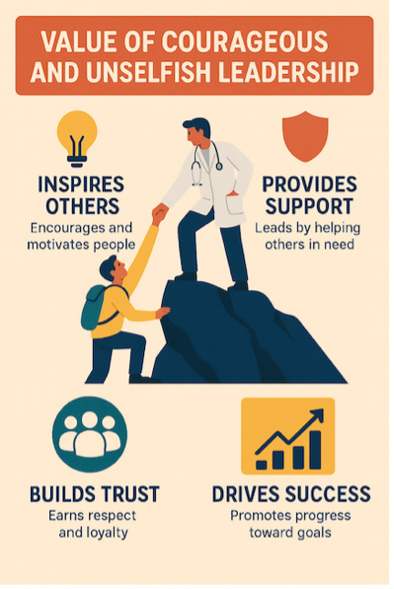
doctor displays unselfish support and leadership on mountaintop


Organizations everywhere risk struggling with internal conflicts or resistance to change, lack of transparency, unclear identity and vision, self-serving or ego-driven decision-making, and flawed groupthink. These issues can steer societies away from their goals to provide benefits to their collectives and the communities they serve. Hence, they jeopardize the organization’s future and may irreversibly harm the organization’s reputation. 

What applies to other organizations and society at large also applies to bronchology and interventional pulmonology (IP) associations around the world. The IP culture built around technical innovation, science, ethical practice, and unselfish assistance to patients everywhere has evolved favorably over time, but this has not been without facing many challenges. 

To cite one example of overcoming internal resistance to change (there are many others), the culture dates from an era when forward-thinking, independent but often self-reliant practitioners were dismissively labeled as “cowboys” by colleagues who were less inclined toward new interventional approaches. For many years, a few leaders had to dedicate significant time and effort to demonstrate the safety and value of their procedures, and to survive academically within more conservative academic medical establishments. Using “show and tell” lectures and retrospective studies – prospective and randomized studies would come later – they proved that certain interventions significantly improved clinical outcomes, quality of life, and patient survival. Gradually, they overcame resistance from colleagues, skeptical referring physicians, other specialists wary of competition, hospital administrators, and members of pulmonary societies who were, at their worst, obstructionists. 

Similar resistance was faced by those who challenged existing training methodologies. Significant energy was needed to move beyond the outdated apprenticeship model of medical education to more modern and complementary learner-centric and patient-friendly approaches. These include using inanimate models, simulation-based training, ongoing competency and skill assessments, checklists, faculty development programs, multidimensional curricula structured according to individualized needs assessments, a democratization of learning resources, and computer/instructor-assisted feedback methods. Today, it is universally accepted that patients must not suffer the burden of procedure-related training. 

Whether in establishing the value of a technology-driven medico-surgical subspecialty or in championing a novel means for training its practitioners, history demonstrates that persistence and resilience in the face of opposition will ultimately yield rewards. Courageous and unselfish leadership may often go unnoticed, but the benefits gained by practitioners, students, and patients alike are substantial and often life-changing. Leaders who feel disenchanted by their colleagues’ apparent lack of enthusiasm should be inspired by these words from former U.S. President Ronald Reagan: “There is no limit to the amount of good you can do if you don’t care who gets the credit.”

IP is what we are, not just what we do


The history of interventional pulmonology is marked by a continuous drive to improve the diagnosis and treatment of lung, airway, and pleural disorders through minimally invasive techniques. From the early days of rigid bronchoscopy and thoracoscopy to the current era of robotic-assisted procedures, augmented reality, fusion imaging, and personalized therapies, interventional pulmonology has evolved into a dynamic and essential component of modern respiratory care. As the field continues to innovate, it promises to further transform the landscapes of pulmonary medicine and thoracic surgery. 

This gradual transformation is at the root of a potential identity crisis for the field’s practitioners. This is partly because it is in our human nature to want to delineate ourselves from others, as in the adage, “we are all equal, but some are more equal than others.” It is also because not everyone incorporates all types of airway and pleural procedures into their daily practices. Indeed, several terms are used to describe the field’s practitioners or their area of focus, which can be confusing to medical colleagues as well as patients. These include terms such as bronchoscopy, advanced bronchoscopy, interventional pulmonology, interventional bronchoscopy, and endoluminal airway surgery. 

An identity crisis can lead to factions, which breed division rather than unification. This is the real danger of the looming identity crisis for practitioners defined by what they do rather than what they are. For example, can those who perform airway procedures but do not perform thoracoscopy call themselves interventional pulmonologists? And what of those who are not formally trained in pulmonary or pleural procedures, but gain technical skills solely from national meetings and workshops? Or, as in the United States, those who perform interventional procedures but are not board-certified? What of pulmonary specialists who perform diagnostic flexible bronchoscopy but only rarely intervene therapeutically, or those who perform flexible bronchoscopy but do not perform rigid? Are “advanced bronchoscopists” also interventional pulmonologists (by no means do I believe the term ‘advanced’ is meant to be used in its hierarchical sense, but rather only as it applies to specific technologies, which by the way, may not seem as advanced ten years from now)?  And, how is the newly fashionable term “endoluminal airway surgery” different from other diagnostic and therapeutic airway procedures?

According to the National Cancer Institute (www.cancer.gov), “intervention” is a treatment, procedure, or other action taken to prevent or treat disease, or improve health in other ways. If we accept this definition, everything we do is “interventional,” but isn’t that also what we are?